The map of T&T Group's and Chairman Hien's special strategic infrastructure.
Strategic links on the North-South connection axis.
If we consider connectivity infrastructure as the "lifeblood" of the economy, then the value of a project lies not only in its capital scale or implementation speed, but also in its position within logistics, production, and regional linkages. In this context, T&T Group's investment strategy demonstrates a noteworthy approach: positioning itself at crucial points along economic corridors and strategic connectivity routes.
In the North, T&T Group's infrastructure footprint is clearly evident along the Lao Cai – Hanoi – Hai Phong – Quang Ninh axis, one of the main routes for import and export goods in the North. This area also has a high concentration of industrial parks, seaports, and production chains targeting the Chinese and ASEAN markets.
On this connecting route, Vietnam SuperPort™ in Phu Tho is positioned as a multimodal "super dry port". The project's greatest value lies not only in its 83-hectare scale or total investment of approximately $300 million, but in its role as a cargo consolidation and transshipment point on the Lao Cai – Hanoi – Hai Phong logistics route, where goods are reorganized before continuing their journey to seaports, railways, or inter-regional transport networks.

Moving northeast, since 2015, T&T Group has been involved in Quang Ninh Port as a strategic shareholder. Rapid changes have occurred as Quang Ninh Port quickly transformed into a key maritime link in the northern logistics axis. Currently, the port holds over 90% of the market share for port and logistics services for agricultural products departing from the Cai Lan area and the northern region.
Located on the main economic artery of the North, the Hanoi Capital Region's Ring Road 4, in which T&T Group is participating in the implementation of component 3 (expressway construction), is not simply an inter-provincial transportation route. With a scale of over 113 km and a total investment of over 56,000 billion VND under the PPP model, the project is considered one of the key national infrastructure projects, playing a crucial role in reshaping the development space around the capital city.
Once the entire route is established, industrial hubs in Hanoi, Hung Yen, and Bac Ninh will be brought closer together within a single logistics space. The flow of goods, production, and supporting services will therefore be reorganized on a regional scale instead of developing in a fragmented manner as before.

In Central Vietnam, the Quang Tri airport project – currently in its accelerated completion phase – further demonstrates T&T's presence in infrastructure components that have the potential to expand the region's connectivity. Once operational, the project will become a crucial infrastructure link, connecting to a series of strategic transportation routes such as the Cam Lo – La Son expressway, National Highway 15D, the Lao Bao – Cam Lo expressway, the My Thuy deep-water port, and the coastal road associated with the East-West Economic Corridor (EWEC).
Also in Quang Tri, T&T Group is gradually completing the foundational components for the industrial and logistics development space of the region. A highlight is the Hai Lang LNG Power Center – Phase 1 project in the Southeast Quang Tri Economic Zone, covering approximately 120 hectares, with a capacity of 1,500 MW and a total investment of nearly 54,000 billion VND. While Quang Tri Airport opens up new connectivity capabilities for the region, the Hai Lang LNG plays a crucial role in energy infrastructure – one of the fundamental conditions for the development of large-scale industries, logistics, and new production chains in Central Vietnam.
In the South, T&T Group continues to demonstrate its approach of "placing projects along key economic corridors" through major expressway and industrial park projects.
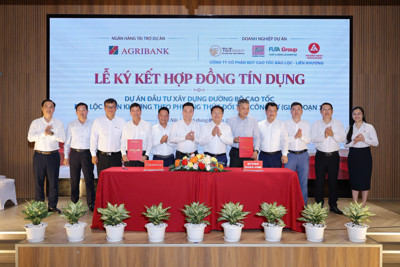
In Lam Dong province, the Bao Loc – Lien Khuong expressway is located on the axis connecting Ho Chi Minh City with the Central Highlands – the largest agricultural raw material region in the country. This nearly 74 km long route is also the final section of the Dau Giay – Lien Khuong axis. When the entire route is completed, the distance between the Central Highlands and Ho Chi Minh City, the southern seaport system, and Long Thanh airport will be further shortened. This will not only help reduce logistics costs for agricultural products but also expand development opportunities for the entire Central Highlands – South Central region.
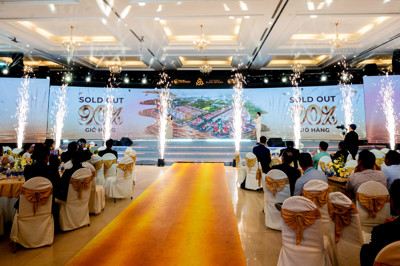
T&T Group's infrastructure "map" extends down to the Mekong Delta with the Vam Cong Industrial Park (An Giang) – a project located on the Chau Doc – Can Tho – Soc Trang axis, opening up a new logistics space for the entire Southwest region. With its location near the Hau River waterway system, inter-regional expressways, and the agricultural trade network of the Mekong Delta, the Vam Cong Industrial Park will become a transit and deep processing hub in the region's agricultural logistics chain.
Looking at it from a broader perspective, this chain of projects from North to South demonstrates that T&T is not simply expanding its multi-sector investments. Behind it lies a strategic infrastructure "map" gradually taking shape along the vital arteries of the economy. From here, T&T's infrastructure, logistics, and industrial "fishbone" branches are beginning to spread to many new localities and production regions.
…to the cross-border connectivity strategy of Chairman Hien.
Just before the start of 2026, observers were surprised when the Savan 1 wind power plant in Savannakhet (Laos) officially began commercial operation, bringing clean electricity from Laos to Vietnam. With a total designed capacity of 495 MW, including 300 MW in phase 1, and a total investment of approximately 768 million USD, Savan 1 is considered one of the exemplary cross-border wind power projects implemented with a direct connection between the two countries.
Notably, to bring the project to completion, T&T Group had to simultaneously address a series of complex challenges related to terrain, harsh weather conditions, transportation infrastructure, and procedures for transporting oversized and overweight equipment through the Lao Bao border gate in Quang Tri province. However, the entire process, from completing legal procedures and signing contracts to construction and investing in transmission infrastructure and system connectivity, was completed in just about 16 months – a rare milestone for a large-scale onshore wind power project in Southeast Asia.
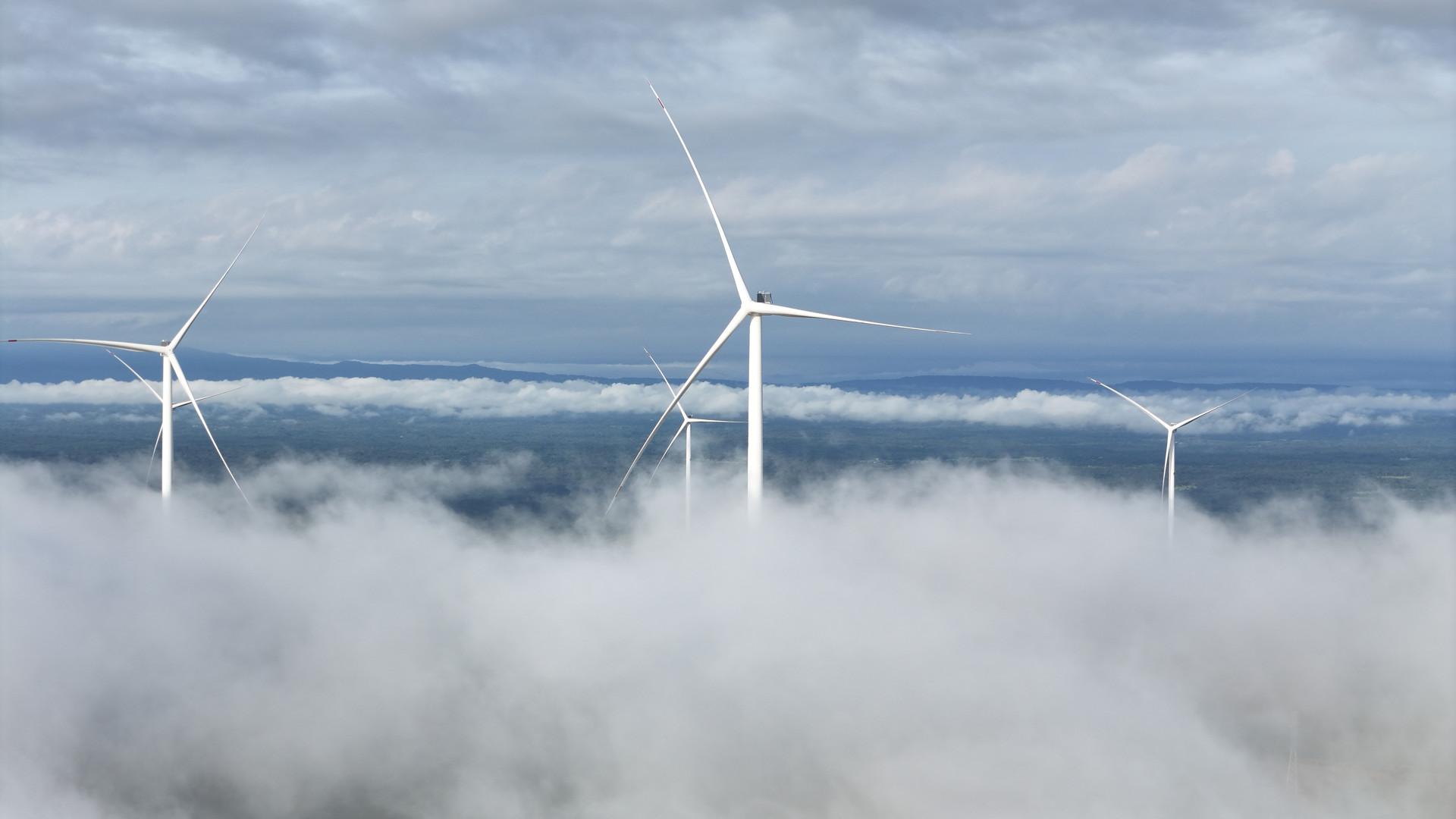
Savan 1 is not simply the story of a wind power project with direct participation from the private sector, but can also be seen as a new "link" in a long-term vision. There, T&T begins its journey of expansion, moving from developing domestic infrastructure projects to gradually participating in cross-border connectivity structures, where energy, logistics, and trade are increasingly intertwined in the regional supply chain.
Returning to the story of Vietnam SuperPort™, on a regional scale, it is a pioneering link in the ASEAN Smart Logistics Network. Vietnam SuperPort™ develops in conjunction with the challenge of connecting regional supply chains, with the ability to directly connect the China-Southeast Asia transportation system and the global market via road, rail, air, and sea.
In particular, with increased investment in railway lines connecting Vietnam and China, this multimodal "super dry port" has the potential to become an important "international hub" in regional and global supply chains.
In Central Vietnam, Quang Tri Airport also serves as a "gateway" for Vietnam to reach out to the world. The project is located right at the gateway connecting Myanmar, Thailand, and Laos with the East Sea – one of the increasingly important cross-border logistics corridors in ASEAN, opening up significant opportunities for multimodal transport, border logistics, and regional goods movement.
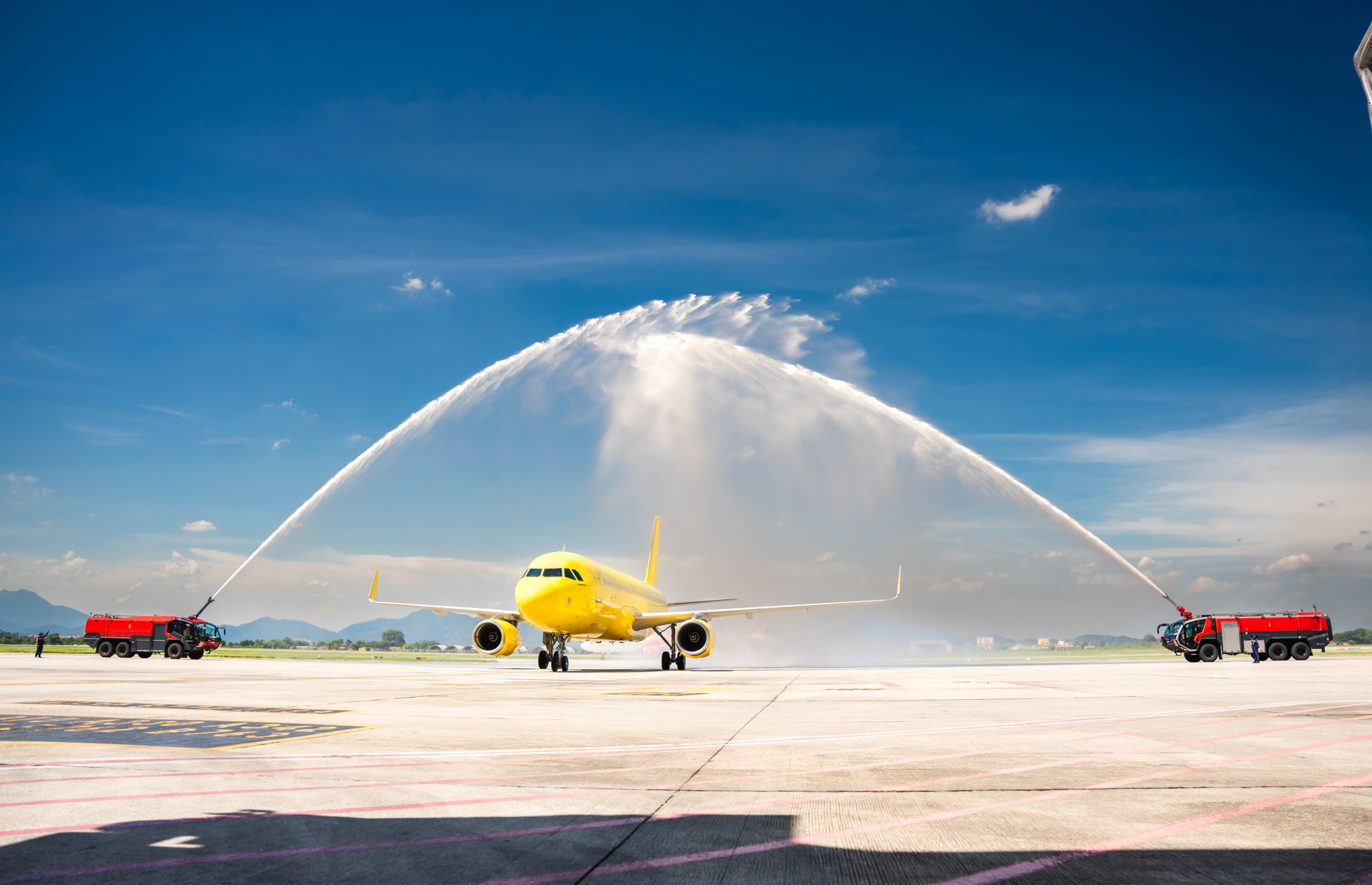
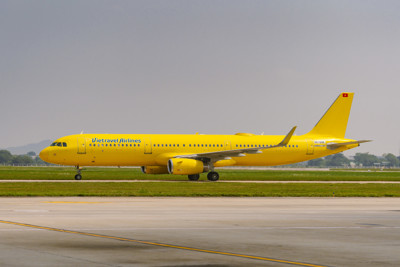
Finally, in the sky, Vietravel Airlines – the youngest member of the T&T ecosystem – is seen as the perfect piece to complete the "go global" strategy regarding strategic infrastructure pursued by Chairman Hien. While port, logistics, highway, and airport projects help T&T establish a presence on the ground, Vietravel Airlines opens up a new layer of connectivity in the air, especially in the air cargo sector – a segment expected to continue strong growth with the boom in e-commerce and the demand for high-value goods transportation in Asia.
Data from Vietravel Airlines shows that cargo volume in Q4/2025 reached 2,332 tons, double that of Q3. In Q1/2026, despite the impact of the Lunar New Year holiday and aircraft maintenance, volume remained at over 2,100 tons.
In the context of a rapidly restructuring global supply chains, infrastructure is increasingly becoming a decisive factor in each nation's competitiveness. From domestic logistics corridors to cross-border projects, T&T Group's moves demonstrate its commitment to fundamental components of the economic flow. Therefore, the message "businesses are the center, infrastructure is the foundation," mentioned by businessman Do Quang Hien at the beginning of 2026, is gradually being reflected in the very infrastructure connections and ecosystem that T&T Group is pursuing.