From highways, airports, mega dry ports to aviation: How T&T Group is building a multimodal logistics structure.
Growth bottlenecks
The Vietnam Logistics Industry Report 2025, conducted by the Analysis Center of SHS Securities Joint Stock Company, points out that the Vietnamese logistics industry is facing a major paradox: demand is increasing rapidly, but the system's capacity is not keeping pace.
Specifically, during the period 2025–2029, logistics is projected to maintain a growth rate of 6–7% per year, driven by exports, e-commerce, and FDI inflows. E-commerce alone, with a size of approximately $31 billion in 2025 and projected double-digit growth rates for several years to come, places new demands on the speed, cost, and scalability of the logistics system.

However, according to SHS, this growth is occurring on a structure that has not been adequately restructured. With road transport still accounting for nearly 80% of total cargo volume, Vietnam's logistics costs are unlikely to decrease sustainably, despite efforts to optimize operations at each individual stage. Lower-cost methods suitable for high-volume transport, such as inland waterways and railways, have not yet played their role due to the lack of integrated logistics centers and synchronized connecting infrastructure. As a result, logistics is in a state of "compressed growth": demand is increasing rapidly, but the organizational capacity of the supply chain is not keeping pace.
Another crucial bottleneck is the limitation of public investment. The period 2025–2035 is identified as a new investment cycle for logistics infrastructure, linked to a series of major projects such as Long Thanh International Airport, the Lao Cai – Hanoi – Hai Phong railway line, along with a network of expressways, ring roads, and regional logistics centers. In the context of the State gradually shifting to a facilitating role and establishing the institutional framework for infrastructure development, many logistics projects are being implemented through socialized approaches, with businesses playing the leading role in investment and implementation, while also being more proactive in financial management and operational efficiency.
At this point, logistics is no longer about optimizing individual projects, but has become a test of implementation capabilities at the system level. In this context, the role of private enterprises with a long-term vision, such as T&T Group , is becoming clearer as direct participants in solving the structural problems of Vietnamese logistics.
From resolving bottlenecks to shaping the national logistics structure: A perspective from T&T.
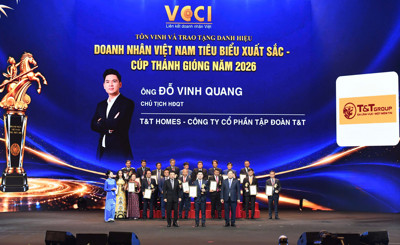
As a leading multi-sector private economic group in Vietnam, T&T Group's approach to the logistics sector clearly demonstrates its long-term strategy.
In 2015, T&T Group surprised everyone by becoming a strategic shareholder of Quang Ninh Port. Instead of treating it as an independent asset, T&T repositioned Quang Ninh Port's role within the northern logistics network. Just one year after T&T Group's involvement, cargo throughput increased by approximately 30%, handling volume increased by 33%, revenue increased by 31%, and profits surged by 280%.
After more than a decade of restructuring, the role of Quang Ninh Port has become increasingly important. By 2025, the port's cargo handling volume is expected to reach over 11 million tons, with revenue reaching approximately 702 billion VND and profit reaching nearly 165 billion VND – the highest level since its establishment. The port currently holds over 90% of the market share for port and logistics services for bulk agricultural products in the Cai Lan area and the North, while gradually expanding its role from a loading and unloading hub to an integrated logistics center.

For T&T Group, this is seen as the first step towards deeper involvement in large-scale logistics structures.
In 2018, T&T Group partnered with the logistics giant YCH (Singapore). At that time, YCH put forward the idea of forming a regional-scale smart logistics network – an idea that aligned with T&T Group's vision. The result of this collaboration was the creation of Vietnam SuperPort ™ – the first component of the ASEAN Smart Logistics Network.
The distinguishing feature of Vietnam SuperPort ™ lies in its multimodal, integrated logistics approach, rather than operating as a traditional warehousing hub. Here, road, rail, inland waterway, and high-tech logistics are organized within a single interconnected structure, aiming to reduce transportation costs and improve the efficiency of large-scale goods movement.
With its location on the Hanoi – Lao Cai – Hai Phong axis, near major industrial production centers and important export corridors, the Vinh Phuc Inland Container Depot (ICD) will become a hub for reorganizing cargo flows at the regional and national levels, even regionally, instead of just a local cargo consolidation and delivery point.

But for T&T Group, logistics doesn't stop at individual warehousing centers or ICDs; it expands to include connecting transportation infrastructure and reorganizing inter-regional goods flows. In the North, the Quang Ninh Port and the Nam Phuc Tho Industrial Park (Hanoi) combine to help distribute goods more efficiently, instead of concentrating them in a single area. In the South, the nearly 200-hectare Vam Cong Industrial Park, recently launched in An Giang, also demonstrates a similar approach. The project is not simply envisioned as a pure industrial park, but is linked to logistics, processing, and high-value supply chains. With its location connecting regional transportation corridors and logistics systems, the industrial park will contribute to expanding the region's capacity for transshipment, processing, and export of agricultural and aquatic products.
In the Central Highlands, the Bao Loc – Lien Khuong expressway, in which T&T Group is participating in investment, is considered a crucial link in the restructuring of inter-regional logistics connectivity. Currently, many components of the project are being accelerated. Upon completion, the route will expand connectivity between the Central Highlands and the seaport system, logistics centers, and export chains in the South; contributing to reducing costs and reorganizing the Central Highlands' agricultural supply chain in a more efficient manner.

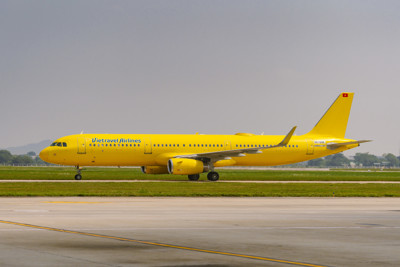
Alongside ground logistics, T&T has also expanded into aviation through Quang Tri Airport and Vietravel Airlines. Within this structure, Quang Tri Airport is positioned as a new multimodal logistics hub in Central Vietnam. Significantly, T&T Group's vision has shifted from a single-unit development approach to one focused on creating new development spaces. In this model, the airport is an integral part of a large-scale aviation, logistics, service, trade, and urban complex. With this approach, Quang Tri Airport is expected to become one of the largest logistics hubs in the region.
Meanwhile, Vietravel Airlines plays a crucial role in completing the air cargo transport capacity within the "sea-land-air" logistics structure. Data from the airline's air cargo operations shows positive growth. In Q3 2025, cargo volume reached approximately 1,025 tons, but this increased more than twofold to 2,332 tons in Q4 2025. In Q1 2026, despite the impact of the Lunar New Year holiday and aircraft maintenance, volume remained above 2,100 tons. Currently, the airline also plans to increase its fleet to 12 aircraft by the end of 2026, thereby further enhancing its passenger and cargo transport capacity.

Notably, the majority of the projects that T&T Group is involved in belong to the infrastructure sector, which has a long investment cycle and requires significant organizational and capital capabilities – a field that not many private enterprises choose to pursue.
Experience from leading Asian logistics hubs like Singapore and Dubai shows that national logistics capacity is not built from isolated projects, but from the ability to organize large-scale multimodal networks. Notably, this model is formed by businesses simultaneously involved in transportation infrastructure, logistics, and supply chain organization.
Looking at the case of T&T Group, it's clear that Vietnam is beginning to see private enterprises becoming more deeply involved in the development of logistics infrastructure based on an integrated approach. This is considered one of the crucial conditions for gradually reducing costs, enhancing the competitiveness of the supply chain, and moving closer to becoming a new regional transit hub.
T&T Group's founder and CEO, Do Quang Hien, once stated: "Logistics is the lifeblood of the economy, and if Vietnam wants to break through, it must become a regional distribution hub." The ecosystem that the Group is creating demonstrates how a private enterprise model can contribute to solving key bottlenecks in this specialized field.